Groom Safa Sherwani Styling for Your Wedding Day
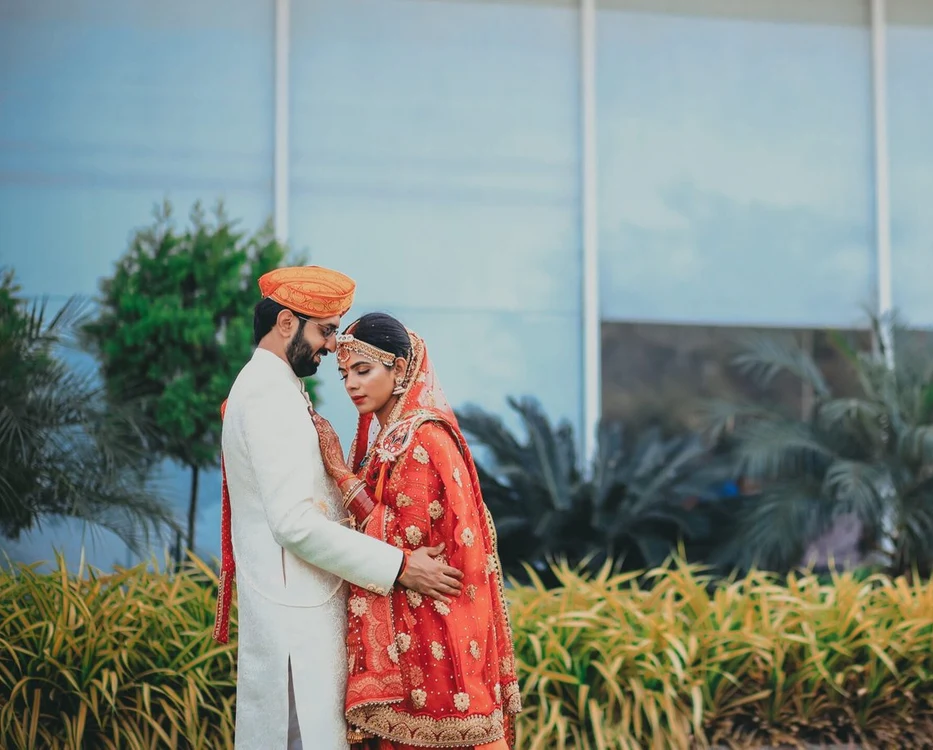
On the wedding day, a groom safa sherwani combination does for the groom what the lehenga does for the bride: it sets the whole look. The safa adds height and colour at the top of the frame, the sherwani carries the silhouette, and together they decide how the groom reads in every portrait, from the getting-ready room to the couple session after the ceremony. This guide walks through the choices that matter: colour pairing, the drape, the kalgi, layered malas and fit, each with an eye on how it photographs.
Why the safa anchors the groom’s look in photos
In a couple portrait, the eye travels to the top of the frame first, and that is where the safa sits. A well-tied safa gives the groom a strong vertical line, balances the bride’s dupatta and jewellery, and adds a block of colour that separates him from the background. Without it, even a beautiful sherwani can look unfinished in wide shots.
The safa also frames the face. A clean wrap with a neat fan at the front keeps the forehead open, which matters in close portraits and side profiles. A safa tied too low shades the eyes; pulled too tight at the sides, it flattens the head shape. Small things on the day, and very visible things in a large print.
Groom safa sherwani colour pairings that work
Build the pairing around one anchor colour and one neutral:
- Ivory or cream sherwani with a warm safa, in maroon, rust, orange or deep pink. The neutral base keeps the look classic and lets the safa carry the colour.
- Pastel sherwani, in mint, powder blue or blush, with a tonal safa a shade or two deeper. Soft on soft works well for daytime functions and open-air venues.
- Deep sherwani, in bottle green, maroon or navy, with a contrasting safa in cream or gold. A light safa lifts the whole frame and stays clean against dark evening decor.
One practical rule: finalise the safa after the bride’s outfit is set. A single echo between the two, safa to lehenga border or safa to dupatta, ties the couple together in portraits without looking matched.
Drape styles, kalgi and layers
Safa draping runs from a simple, close wrap to a full Rajasthani style with a pronounced fan. A taller frame carries a larger fan comfortably; for a smaller frame, a tighter wrap keeps the proportions right. Whatever the style, have the wrap finished at least twenty minutes before the ceremony or couple session. A fresh safa settles, and the final tucks always take longer than expected.
A kalgi, the jewelled brooch at the front of the safa, gives close shots a point of detail. Keep it proportionate: a heavy kalgi on a slim safa pulls the wrap sideways over a long event. Layered pearl or bead malas over the sherwani photograph well in three-quarter portraits; two or three strands are enough before the chest starts to look crowded. These are exactly the details worth a dedicated frame, and our post on Groom safa sherwani styling made simple: colour pairings, safa drape, kalgi and mala choices, fit checks, and how each one shows up in your wedding photos. shows why the smallest shots tell the biggest story.
Sherwani details that show up on camera
Buttons, embroidery and the stole all read larger on camera than in the mirror. Metal or contrasting buttons give the front placket a clean rhythm in full-length shots. Heavy embroidery photographs best when it has space: a dense yoke with plain sleeves reads richer than all-over work. If you wear a stole, decide its drape before the session, over one shoulder for formal portraits and both shoulders for the ceremony. Changing the drape halfway through a set of portraits makes the set harder to use together in an album.
The safa-tying moment in getting-ready photos
Safa tying is one of the strongest getting-ready sequences to photograph: the groom seated, the artist working the wrap, and often a father or brother stepping in for the final tuck. Give the moment a clean corner of the room with window light, and keep bags and hangers out of the background. Ten unhurried minutes here produce some of the most personal frames of the day. For more ideas, see our guide to groom getting-ready photography.
Balancing the bride’s outfit in couple portraits
In a couple portrait, the two outfits read as one composition. If the bride’s lehenga is heavily embroidered, a cleaner sherwani keeps the frame calm; if her look is minimal, the safa and mala can carry more detail. Colour echo matters more than matching: an orange safa against a red lehenga works because the tones sit in the same family, not because they are identical. Our guide to bridal lehenga photography covers the bride’s side of the frame, and the wedding couple poses guide has pose ideas once the outfits are set.
Fit and finishing checks before the ceremony
A sherwani should sit clean at the shoulder, button without pulling, and fall straight when the groom stands naturally, not only when he holds a pose. Check the collar from the side: it should touch the neck without gaping. The cuff should end at the wrist bone; sleeve length shows in every ring and watch shot. Do a full dress rehearsal with safa, mala, stole and juti a few days before the wedding, and take phone photos in daylight. Small fixes are easy that week and nearly impossible on the morning itself.
Getting the groom safa sherwani pairing right is mostly about decisions made before the wedding week: the anchor colour, the drape, the fit. Once those are settled, the day itself is about wearing it well, and the photographs take care of the rest. If you are also planning a shoot before the wedding, our guide to pre-wedding shoot outfits for men covers that side. And if you are planning your wedding in Indore and want photography that gives the groom’s side of the story equal attention, call us on 7385222228.