Low Angle Bridal Portraits: A Perspective Plan for Indore Brides
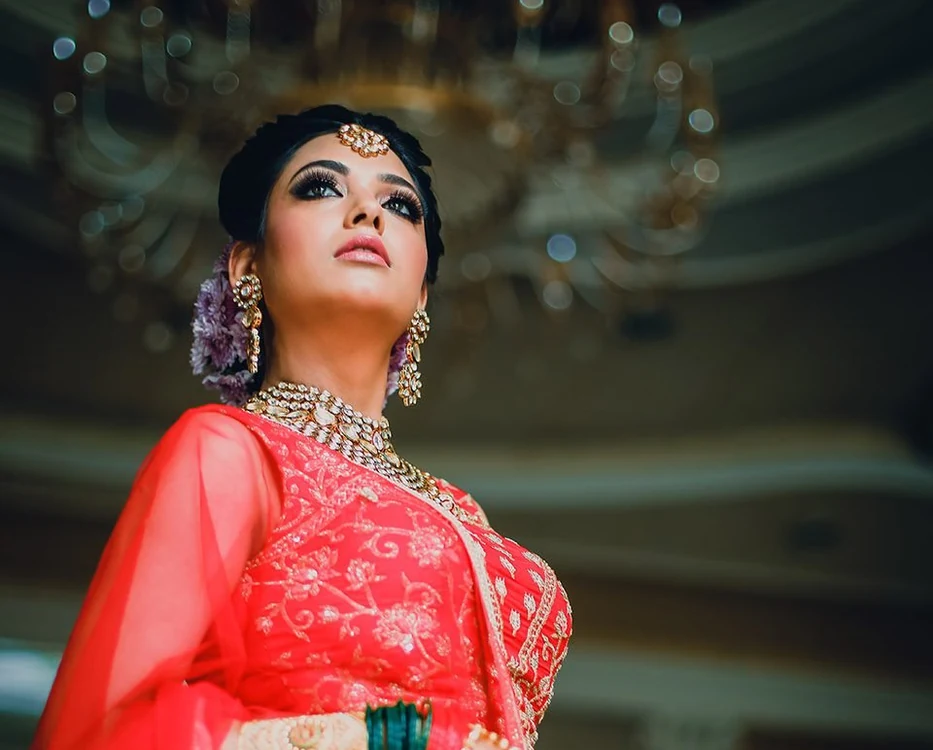
Low angle bridal portraits change the viewpoint, not the bride. A camera placed below eye level and aimed gently upwards can bring a different sense of scale to a portrait. The useful question is whether that perspective suits the photograph you want, rather than whether the camera can get closer to the floor.
For an Indore wedding, treat this as a small variation within your bridal portrait set. Keep a familiar eye-level photograph as well. A dramatic camera position should be an option you can compare, not a rule that decides how every picture of you will look.
Understand what low angle bridal portraits change
Camera height and camera tilt are separate choices. A photographer can lower the camera while keeping it fairly level, or lower it and point it upwards. Canon’s guide to position and angle explains that distinction. It matters because a small change in height need not become an extreme upward view.
Objects closer to the camera appear larger relative to things farther away. In a bridal portrait, that can change the relationship between the face, shoulders, hands and outfit. Ask for a test frame before committing to a long sequence. You are checking an interpretation of your appearance, not correcting something that is wrong with your body.
Choose the face before the dramatic viewpoint
Begin with a relaxed stance and a comfortable head position. The photographer can move the camera first, then suggest a small turn if it helps. Avoid holding your chin high or pulling your neck into a strained position simply to match a reference. If an adjustment feels awkward, reset rather than trying to maintain it.
A lower camera can change how the underside of the chin and nose appear, and whether the eyes are easy to see. These are reasons to review the result, not reasons to label a face unsuitable. A less steep angle, more distance or a return to eye level may give you the photograph you prefer. For a separate expression-led option, compare the ideas in our camera-facing bridal portrait guide.
Leave room between the camera and the bride
Getting very close from below can make the nearest shoulder, hand or part of the outfit dominate. That may be a deliberate fashion effect, but it need not be the aim of a wedding portrait. In his wide-angle portrait tutorial, Neil van Niekerk shows why distance and placement within the frame deserve attention when controlling exaggerated proportions.
Do not choose a lens number as a guarantee of a natural result. Ask the photographer to compare viewpoints from a little farther away and keep your face away from an extreme frame edge. If a hand is extended towards the camera, check its apparent size in relation to the face. A small change in hand placement can be simpler than trying to fix the proportions later.
Look above and behind the face
An upward view brings more of the upper background into the photograph. Before settling into the pose, check for ceiling fixtures, bright windows, signs or branches that compete with the head. A chandelier can contribute to the setting, but its outline need not appear to grow out of a hairstyle or headpiece. Moving the camera sideways may help without moving the bride.
Check the eyes and skin as carefully as the background. If the eyes disappear into shadow or jewellery catches a distracting bright reflection, pause for the photographer to adjust the light or position. The aim is a readable face within the scene, not a dramatic ceiling with a bride underneath it. An attractive backdrop does not make every camera position work.
Keep clothing and comfort in the frame
Check the dupatta, neckline, jewellery and sleeves from the actual camera position. An arrangement that looks tidy at standing eye level can read differently from below. Have a helper make any clothing adjustments you want before the photographer continues. You do not need to pull on heavy jewellery or balance in an uncomfortable stance for this effect.
Keep the working area clear so the photographer can crouch without blocking a doorway or creating a trip hazard. The bride can stay on an ordinary, stable surface. There is no need to stand on furniture or a ledge to create a lower viewpoint. If you also want the complete outfit recorded, make a separate head-to-hem bridal portrait rather than forcing every detail into this frame.
Compare a small set before moving on
Try an eye-level portrait, a gently lower viewpoint and, only if you like it, a more pronounced upward angle. Keep the expression similar for that first comparison so the camera position is the main difference. Then add a small change of gaze or shoulder direction to the version you prefer.
Review the whole face, headpiece, background lines and the apparent size of nearby hands or shoulders. Keep the frame because it feels like you and fits the album, not because it uses a difficult technique. To discuss a bridal portrait brief for your Indore wedding, call WPII on 7385222228.