
Bridal Hands on Waist Pose: A Comfortable Plan for Indore Brides
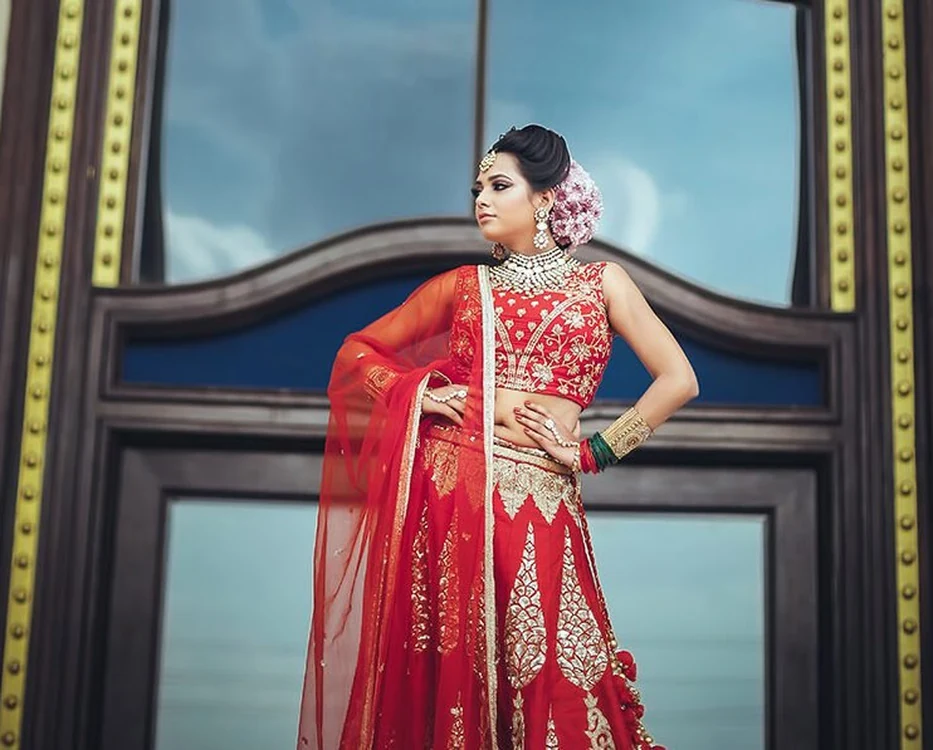
A bridal hands on waist pose gives your hands a clear place to rest while keeping the face, outfit and expression in view. It can look composed without becoming rigid, provided the fingers touch lightly and the shoulders stay comfortable. For brides planning wedding portraits in Indore, the useful question is not how far to push the elbows out. It is how to make this position feel like you.
The red-outfit portrait here shows one interpretation: both hands near the waist, elbows bent and the face turned away from the camera. Use it as a starting point for a conversation, not a shape your body must match. Your jewellery, dupatta, mobility and preferred expression should guide the final frame.
Start the bridal hands on waist pose from a steady stance
Before placing either hand, stand somewhere level with enough room for the outfit. Settle your feet in a position you can hold without balancing on a heel or twisting a knee. A slight body turn is an option, not a rule. Compare a comfortable front-facing frame with a small turn and decide which shows the outfit as you want it remembered.
Let your arms hang briefly, breathe out and then bring the hands into position. That reset is easier than trying to release tension after every part of the pose has been arranged. If the skirt hides your feet, tell the photographer when the stance feels unstable. The photograph cannot reveal every pressure point beneath an outfit.
Rest the fingers instead of pressing into the fabric
Place the hands lightly near the waist or just above the hips, wherever the blouse, waistband and jewellery allow. Keep the fingers gently curved rather than spread into a fan or clenched together. There is no need to pull the waist inward or hold your breath.
Watch for bangles catching an embroidered edge, rings snagging net fabric or fingertips covering a detail you want visible. Ask the stylist to settle the dupatta before returning to the pose. A photographer can suggest a hand position, but should ask before moving your hands or clothing. This portrait hand-posing guide also starts with giving hands a simple place to rest and avoiding stiff fingers.
Give the elbows room without locking the shoulders
A small gap between an arm and the outfit makes the arm position easier to read. It does not require a wide, symmetrical triangle on each side. Bring one elbow a little closer if the other position feels forced, or lower one hand slightly. Check the camera view rather than judging the pose only in a mirror.
Keep the shoulders released rather than lifting them toward the earrings. If the position feels tiring, drop both arms and start again. One hand at the waist with the other resting by the skirt is a useful alternative. The aim is a clear gesture, not a test of how long you can hold still.
Choose the gaze after the hands feel settled
Once the stance is comfortable, try looking toward the camera, just past it, and then gently to one side. Move only as far as your neck and jewellery allow. A turned face changes how light reaches the eyes, so let the photographer check that before asking you to hold the position.
You do not need a serious expression to make this pose work. A quiet smile or a natural pause can suit the same hand placement. Our direct gaze bridal portrait guide explores the camera-facing option. Keep the expression you recognise, rather than forcing a mood to match a reference.
Check the background, light and portrait edges
A doorway or plain wall can give the pose structure, but inspect what sits behind the head and elbows. A strong line cutting through the hair or a bright object beside the face can compete with the portrait. Take a test photograph and adjust the camera position or background before changing your posture again.
Ask for both an outfit view and a closer portrait, leaving the full head visible in each. A closer crop should still make the hand placement understandable rather than accidentally cutting through the fingers. For the wider version, use our full length bridal portrait plan to check the hem, footwear and space around the outfit. The featured image is a pose reference, not evidence of a particular venue or its availability.
Keep a simple alternative in your portrait plan
Save one reference and tell your photographer what you like about it: the hands, the face direction, the red fabric or the clear outline. Those are separate choices. You can keep one and change the others. Canon’s portrait guidance puts comfort and collaboration ahead of a fixed posing formula.
Include a relaxed arms-down frame as well. If your outfit or shoulder comfort makes the hands-on-waist version unsuitable, use the alternative without treating it as a compromise. To discuss bridal portraits for your Indore wedding, contact WPII on 7385222228 and share your outfit, portrait timing and any movement preferences.