Wedding Album Photos: A Selection Guide for Indore Couples
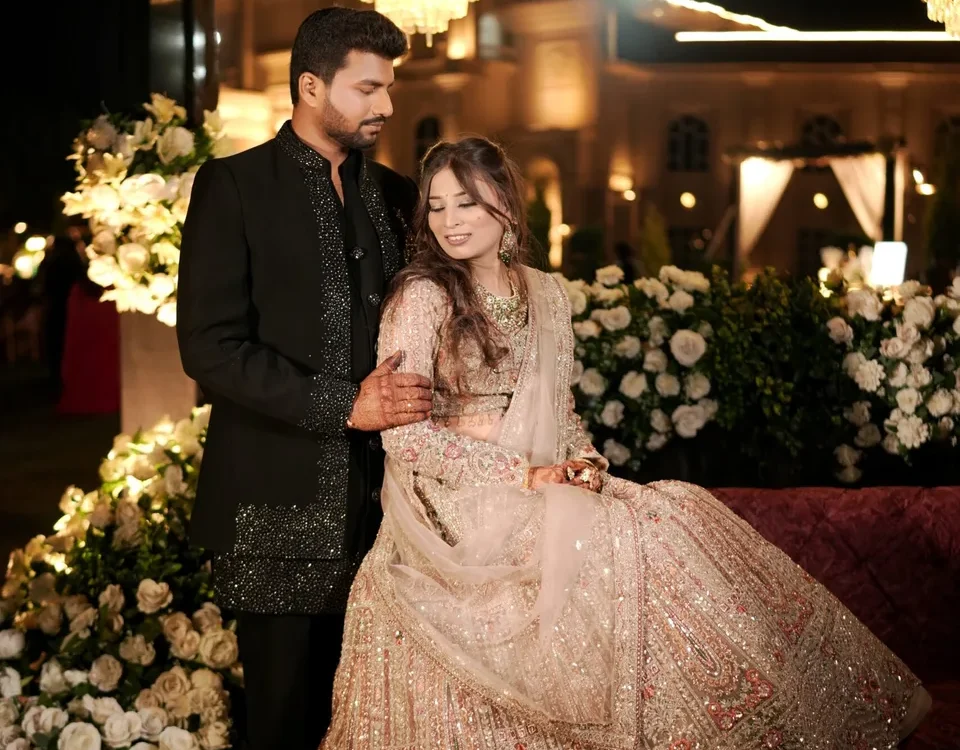
Your wedding gallery arrives, you start marking favourites, and suddenly almost every photograph feels important. One frame has the better smile. Another includes your grandmother. Three more show the same portrait from slightly different angles. Choosing wedding album photos is less about finding the prettiest pictures and more about deciding what you want to remember together.
For Indore couples with several functions, an album can become crowded before the wedding ceremony even begins. The solution is not to squeeze smaller images onto every page. Start with a clear story, keep the people who matter visible, and let the album designer help you turn a shortlist into a book worth opening.
Check the album agreement before selecting
Ask your photographer what is included: album dimensions, number of pages or spreads, cover type, selection process, design revisions and approval steps. A spread usually means the two facing pages visible when the book is open. Confirm how your supplier uses that word so you are discussing the same thing.
There is no universal correct photo count. A small album with busy layouts holds a different selection from a larger book with spacious portraits. Ask for a sample design close to your agreed format. Do not assume a sample with extra pages or a different cover is included in your package. If you are still booking, our questions to ask your wedding photographer help clarify deliverables before the wedding.
Make one shared shortlist
Both partners should see the selection before it reaches the designer. Choose one place to record favourites, ideally the selection feature in your delivered gallery. If that is unavailable, send exact filenames in a single list. Screenshots are useful for discussion but can hide filenames and are not a reliable source for printing.
Separate your album list from the images you want for social media. A dramatic solo portrait may suit a post, while a quieter photograph with a parent may matter more in the book. Neither choice is wrong; they serve different purposes.
Use two passes. First, mark photographs that make you feel something without worrying about the final number. Then review the shortlist together and remove repetition. If the gallery is too large to finish comfortably in one sitting, review one function at a time.
Why we built a simpler photo-selection system
At our studio, we have seen how easily album selection can keep getting postponed. Some clients have taken two or even three years to finalise their photographs. That delay is not always about a lack of interest. When the gallery feels too large and selecting means sending scattered screenshots or filenames, even a task you care about can become difficult to start.
We developed our own photo-selection software to make that step easier. In the gallery link, you can double-tap a photograph or click its heart icon to select it. Instead of building a separate list manually, you mark the images as you browse. This makes it possible to work through a full wedding selection in a few focused hours, rather than letting the decision stretch across months. Your own pace will still depend on the size of the gallery and how much time you want to spend reviewing it together.
The gallery links also include AI face recognition. A guest or family member who wants their personal photographs can scan their face to find the images in which they appear. Finding your own photographs and choosing an album shortlist are different tasks: face recognition helps with the first, while the double-tap or heart selection helps with the second.
Once you have marked your favourites, review the album choices together and check them against the story and people you want in the finished book. An easier selection tool removes the manual work; the personal choices are still yours.
Build the story around your actual celebrations
Write a simple sequence: preparation, arrival, rituals, portraits, celebration and departure. Add haldi, mehendi, sangeet or a reception if these are part of your coverage. You do not need the same number of photographs from every event. Give more space to the moments that mattered to you.
For a multi-day wedding, decide whether one album should cover everything or whether separate books would suit you better. Ask about the cost and format before requesting an expanded design. A long celebration does not automatically require a longer album, but it does require a deliberate selection.
- Opening: a photograph that introduces the people or setting.
- Preparation: a few details and genuine interactions rather than every makeup step.
- Rituals: the meaningful action, expressions and reactions around it.
- Portraits: your strongest couple and family photographs.
- Celebration: movement, laughter and the atmosphere of the event.
- Ending: a frame that gives the story a natural finish.
This is a starting structure, not a mandatory list. If your ceremony was intimate and the dinner was the main celebration, let the album reflect that instead of copying another couple’s sequence.
Choose people before decorative extras
Check whether the people you want to remember appear in the shortlist. A beautiful mandap photograph cannot replace the only clear portrait with a grandparent. That does not mean every guest needs a formal page. It means the selection should not accidentally leave out someone important while repeating similar couple portraits.
Keep a short private note of must-include people and moments. Tell the designer if an image is important despite imperfect light or a less polished expression. They can help you decide where it belongs without treating technical neatness as the only measure of value.
Respect family preferences. Separate portraits can be more comfortable than a combined group, and not every relationship belongs in a standard album formula. You do not need to explain private family details publicly; a quiet note to your photographer is enough.
Remove near-duplicates without losing the moment
When several frames show the same pose, compare expression, gesture and who is visible. Choose the one that says most. Two similar images can belong together when something changes between them, such as a parent approaching and then embracing you. Repeating the same still portrait four times usually adds less.
Vary the view. A wide photograph establishes the space; a closer frame shows emotion; a detail can connect the two. An album made entirely from close portraits can lose the feeling of the venue. One made entirely from wide scenes can lose the people.
Keep both guided portraits and candid moments if you value them. Our candid and traditional photography guide explains why those approaches need not compete.
Review the layout, not only individual photos
Ask to see the album as complete spreads. The designer may pair a photograph you overlooked with a favourite and make the sequence work better. Judge the full page before asking for a swap.
Look for readable faces, comfortable space around important images and crops that do not cut through hands or faces awkwardly. Check the centre fold, page edges and any text. Different bindings and print suppliers have different safe areas, so the designer should confirm the production requirements rather than relying on one generic margin.
Give clear feedback: the spread number, image filename and requested change. Combine both partners’ comments into one list. Ask what revisions are included and whether further changes cost extra before requesting a new round. This article does not set the studio’s revision or album-price policy.
The final approval checklist
- Names and wedding date are spelled correctly wherever they appear.
- The cover, album size and page count match the order you agreed to.
- Must-include people and moments are present.
- No unwanted duplicate, temporary note or placeholder remains.
- The final crops and centre-fold placement have been checked.
- You know which design version you are approving for print.
Send approval in writing for the specific final version. Once printing starts, changes may not be possible without a reprint. Ask about the supplier’s correction process before approval, particularly if you spot an issue in the proof.
Common album questions
Should we select only the best couple portraits?
No, unless a portrait-only book is what you want. A wedding album usually feels more personal when it includes relationships, rituals and the atmosphere around the couple.
Can a slightly imperfect photo still belong?
Yes, when the moment matters. Ask the photographer whether it can reproduce well at the intended size. A meaningful frame need not be used as a full-page image to earn a place.
How many images should we choose?
Use the target agreed with your album designer. Photo count depends on the format and layout. A number found online is not a substitute for your actual package.
The strongest wedding album is not a smaller copy of the entire gallery. It is a considered selection of the day you shared. If you are discussing wedding photography packages in Indore, include album design in that conversation early. When the gallery arrives, you will know how to move from hundreds of memories to one clear, personal book.