Pre-Wedding Shoot Location: Plan a Photo Story
A saved photograph can make a place look like the perfect pre-wedding shoot location. But a complete gallery needs more than one impressive background. It needs pictures that establish the setting, moments that feel like you, and a final portrait you would actually choose for the wall.
For couples planning a pre-wedding shoot in Indore, a useful way to choose locations is to work backwards from that finished gallery. Instead of asking, “How many places can we cover?”, ask, “What will each place add to our photographs?” This changes the plan from a sightseeing route into a small visual story.
Think in pictures before you think in places
Start with a simple exercise. Each of you picks a few reference photographs, then explains what you like without naming the destination. One person may like the space around the couple. The other may like the relaxed expression, the warm colour or the way a dress moves.
Those are different photographic needs. An open view helps with a wide scene. A quiet corner can help you settle into closer portraits. A plain wall may keep attention on your expressions better than a busy landmark. Once you separate the feeling from the address, you have more useful options to discuss with your photographer.
Your references should describe an intention, not become a promise to reproduce someone else’s photograph. The people, light and surroundings will be different. That difference is what makes the session yours.
The opening scene: give the gallery a sense of place
Imagine the first spread of your pre-wedding album. A wider photograph can introduce the surroundings while showing the two of you within them. The location has a real role here: it sets the mood before the viewer sees the small details.
Look for a setting with a clear visual idea. It might be an open landscape, a garden path or an architectural space. Ask your photographer where the camera could stand and how much of the setting belongs in the frame. A beautiful place is less useful if the only permitted camera position faces a cluttered background.
Keep the action simple. Walking together, pausing beside each other or turning towards the camera can be enough. The opening scene does not have to be the most complicated photograph of the day.
The middle: make room for the couple, not only the background
After the wide photographs, the story needs a change in distance. This is where expressions, hands and the way you naturally interact become more important than the destination.
Before choosing a second location, check whether the first already has a quieter part. A sheltered edge, a simple wall or a different camera angle may offer enough variety without another journey. Privacy matters here because many couples find it harder to relax when they are watched.
Give this section time. Constant outfit changes and repeated travel can leave every photograph feeling rushed. A short conversation, a slow walk or a comfortable seated moment can create a different rhythm from formal standing portraits.
If you prefer spontaneous-looking photographs, discuss the approach before the shoot. Our guide to candid and traditional wedding photography can help you describe the balance you want rather than relying on a style label alone.
The closing portrait: decide what deserves the strongest setting
Think about the photograph you might print large, use for a wedding invitation or place at the end of an album. It could be a full-length portrait in a formal outfit, a close frame with very little background or a wide picture with a strong sense of scale.
Choose the closing setup around that use. If the picture is for an invitation, tell the photographer whether space is needed for text. If it is for a wall print, discuss the orientation and the room where it might hang. These small decisions can change the camera position more than another location would.
Do not make the closing photograph depend entirely on a precise sunset or an empty public space. Outdoor conditions can change. Ask what alternative frame would still finish the gallery well if the preferred view is unavailable.
Give every location a job
For each place on your shortlist, write one sentence: “We want this setting because it adds…” Finish it with something specific, such as an open establishing scene, quiet close portraits or a formal architectural frame.
If two locations do the same job, compare which is easier to use. A second stop earns its place when it creates a meaningful change, not simply because it is famous. One accessible setting with several usable corners can produce a more coherent gallery than several similar stops.
Use our Indore pre-wedding location guide to start a shortlist. Then evaluate what each option contributes to your own sequence. Any named place still needs a current check of access, professional-shoot permission and practical arrangements.
Match outfits to the sequence
Think about how the photographs sit next to each other. An outfit that works in isolation may feel disconnected from the rest of the gallery if its colours and formality change sharply without a reason.
You do not need identical colours. Start with the mood of each setup and ask whether both outfits belong in it. Simple clothing may suit a relaxed opening walk; a more formal change may belong with your closing portrait. Keep footwear practical for the actual ground, and check where changing is allowed before planning several looks.
A flowing outfit needs space and manageable conditions. Do not choose exposed edges, active roads or entry into water just because a reference image uses them. Water and uneven ground need a safety assessment, a suitable operator where relevant and a clear way to stop the setup if conditions change.
Build the route around usable time
Put travel, changing and getting ready into the plan before deciding how many setups fit. Time spent reaching a background is time you cannot spend making photographs there.
Ask the photographer which setup should come first and which needs the most flexible light. The order of shooting does not have to match the order of the final gallery. You can photograph the closing portrait early if that is when the setting works best, then arrange the story during selection.
Before committing to a venue, confirm what the operator allows for your date, crew and equipment. Check charges, booked time, changing space and restrictions directly. This article does not claim current permissions or fees for any particular property.
Indore and nearby locations, matched to your photo story
The examples below use actual owner shoot photographs labelled with their locations. Treat them as a visual starting point, not proof of current access or a promise to reproduce the same setup. Rajwada is the city option here; Gulawat, Mandu and Maheshwar belong in a wider-area plan. Do not pack all four into one session simply to collect backgrounds.
Lotus Valley, Gulawat: an open beginning
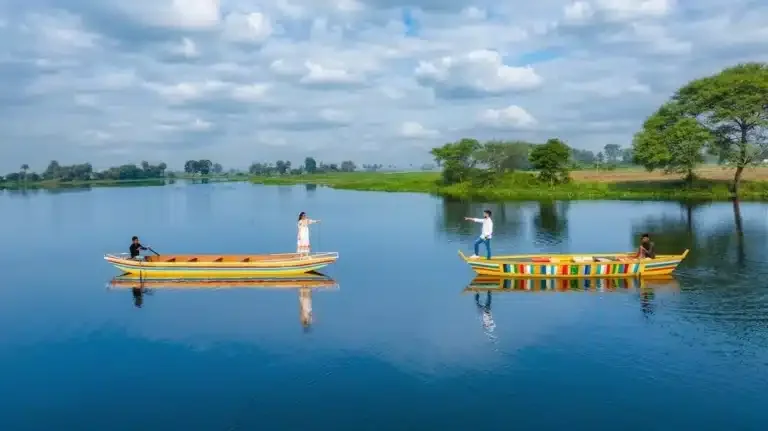
The featured photograph shows two boats within a broad lake view at Lotus Valley, Gulawat. The surroundings carry much of the story, which makes this a useful reference for your opening scene. Ask whether a safe shore-based frame can create the same sense of space before deciding you need a boat. Confirm any boat arrangement, operator, safety provisions and photography permission for your date.
Rajwada, Indore: a framed closing portrait
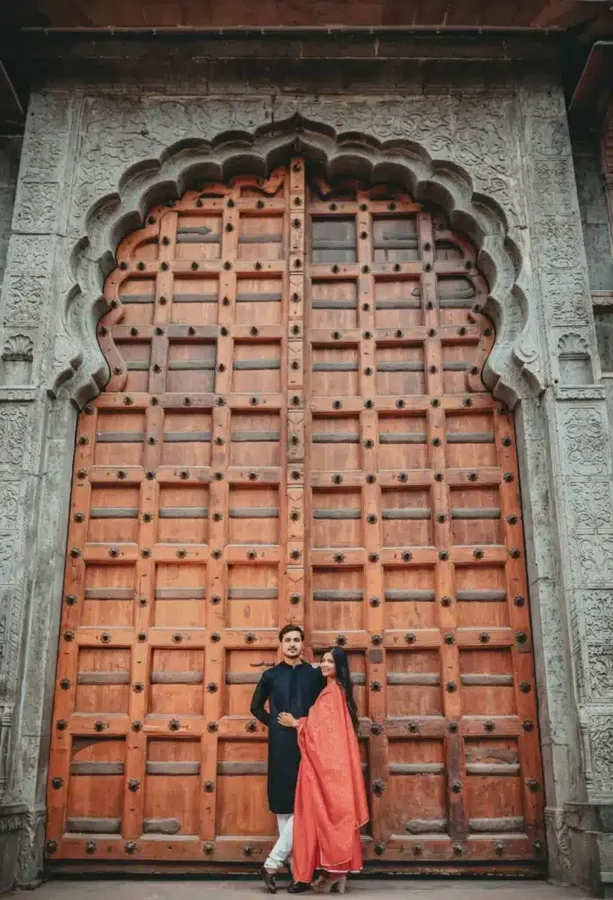
In this Rajwada photograph, the carved doorway gives the full-length couple portrait a clear frame. If your story ends with a formal outfit, this kind of architectural composition can provide a different finish from an open landscape. Discuss permitted camera positions and how to work without blocking visitor movement.
Mandu (Mandav): a quieter middle within heritage architecture
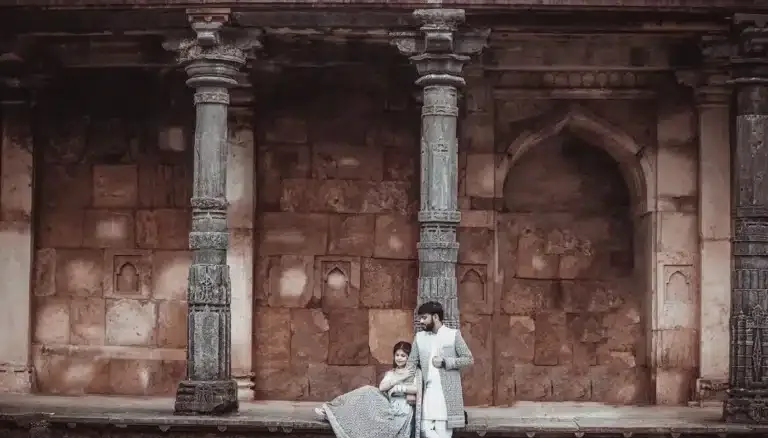
This Mandu photograph uses stone pillars and a seated couple rather than making every picture a wide monument view. It is a useful example of changing the rhythm within one heritage setting. Choose Mandu because you want that visual language, then allow for travel and check the actual areas where professional photography and equipment are allowed.
Maheshwar: keep the setting, move closer
The Maheshwar example shows how a closer couple portrait can still retain the palace steps behind it. Use it to discuss the middle of your story: the background remains recognisable, but the interaction becomes the focus. Maheshwar is a separate travel choice, not an extra stop to squeeze in after an already full Indore session. Check access, changing arrangements and the route before committing.
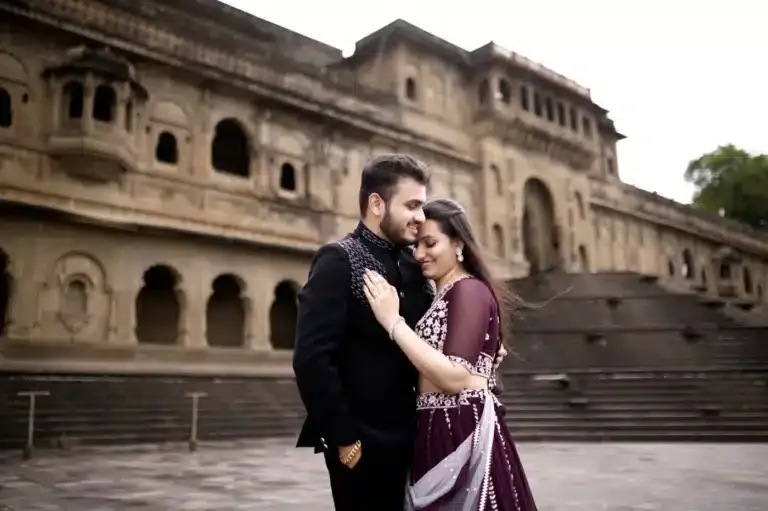
Choose one main setting first. Add another only if it contributes a different scene and leaves enough time for comfortable photographs. Current fees, opening times, permissions and conditions need direct confirmation; none are assumed here.
More Indore-area choices for each part of the story
Rajwada, Lotus Valley, Mandu and Maheshwar are only the beginning of a broad shortlist. The locations below add city architecture, nature, waterfall views, gateway portraits and private sets to the conversation. This is not a claim that every possible place is listed or that any location currently permits a professional shoot. Check the precise shoot point and permission before building your route.
For an architectural opening or a formal final frame
- Lal Bagh Palace (Lalbagh), Indore: consider the palace-area architecture and gardens as a reference for a formal sequence. Confirm which exterior or garden areas are actually available; do not assume access to the interiors or permission for professional photography.
- Krishnapura Chhatris, Indore: the memorial architecture offers another city-based heritage direction. Keep the setting respectful and discuss a permitted composition without disrupting visitors.
- Jaam Gate (Jam Gate), Mhow area: a gateway frame can introduce the surroundings or finish a full-length portrait. Agree on the exact safe shoot point. A hilltop photograph is not permission to use an exposed edge, stop in traffic or expect the mist shown in an earlier session.
For a nature-led opening and relaxed middle
- Ralamandal Wildlife Sanctuary, Indore: a name to discuss for a nature-led idea, subject to the sanctuary’s rules. Check professional-shoot and equipment permission with the responsible authority. Wildlife space should never be treated as a set you can freely rearrange.
- Chidiya Bhadak, Khandwa Road: the owner shoot references show rock formations and water. Ask whether a safe dry-ground frame can deliver the same outdoor mood; verify the meeting point, walking route and seasonal conditions.
- Ganga Mahadev waterfall: use the waterfall-led owner photographs to explain the kind of wide scene or close couple moment you like. Confirm the precise location and current conditions. Entering the water or standing on slippery rock is not a required part of the concept.
- Patalpani Waterfall: consider it as a landscape reference, with safety and permitted access deciding whether it belongs in your session. Keep behind barriers and away from unsafe water edges. A dramatic background is never worth an unsafe camera or couple position.
For a wider-area heritage story
Mandu/Mandav can be discussed through settings such as Jahaz Mahal and Rani Roopmati’s Pavilion, alongside the stone-pillar example above. Sunset Point, Mandu is a separate landscape idea within that plan, not a guaranteed sunset picture. Confirm the exact viewpoint, safe route and allowed access. In Maheshwar, discuss the Ahilya Fort area and Narmada ghats separately because the rules for each space can differ. Choose manageable settings rather than trying to cover every landmark.
For several looks without a long location route
Film City Indore, Hatod and Alankrrit Filmcity and Resort are names to enquire about for set-led photographs. Film-city setups can give the opening, middle and closing portraits different backgrounds within one plan. Ask for current photographs of the exact sets, and verify the venue address, included backgrounds, photographer access and lighting arrangements. Past shoot pictures do not establish that a set is still available.
For a private-property alternative
Other enquiry options include Crescent Spa & Resort, Indore, Neertaru Resort & Wellness, Mhow, Lotus by the lake and Nammadus – The Water Front Resort near Maheshwar. Request recent pictures and written permission for your specific couple shoot before treating any property as a location. Lotus by the lake is a private-property option, not another name for Gulawat Lotus Valley. Nammadus belongs in the wider Maheshwar-area travel discussion rather than a compact Indore city route.
These names expand your choices, not your obligation to visit more places. Pick the setting that contributes the clearest scene, then build the rest of the story around usable time, comfortable movement and confirmed access.
A brief you can take to your photographer
Write down the opening scene, the kind of interaction you want in the middle and the intended use of your closing portrait. Add your shortlisted places, outfit ideas and anything that makes you uncomfortable in front of the camera.
Then ask: can one location cover this story, what would a second location add, and what happens if the main setup cannot be used? A clear answer is more valuable than a long list of destinations.
For couples discussing their session with Wedding Photographer in Indore, this brief keeps the conversation focused on the pictures rather than collecting stops. You can call 7385222228 to discuss your ideas. The right pre-wedding shoot location is the one that gives your story room to happen.