Wedding Couple Poses: Natural Portrait Ideas for Indore Couples
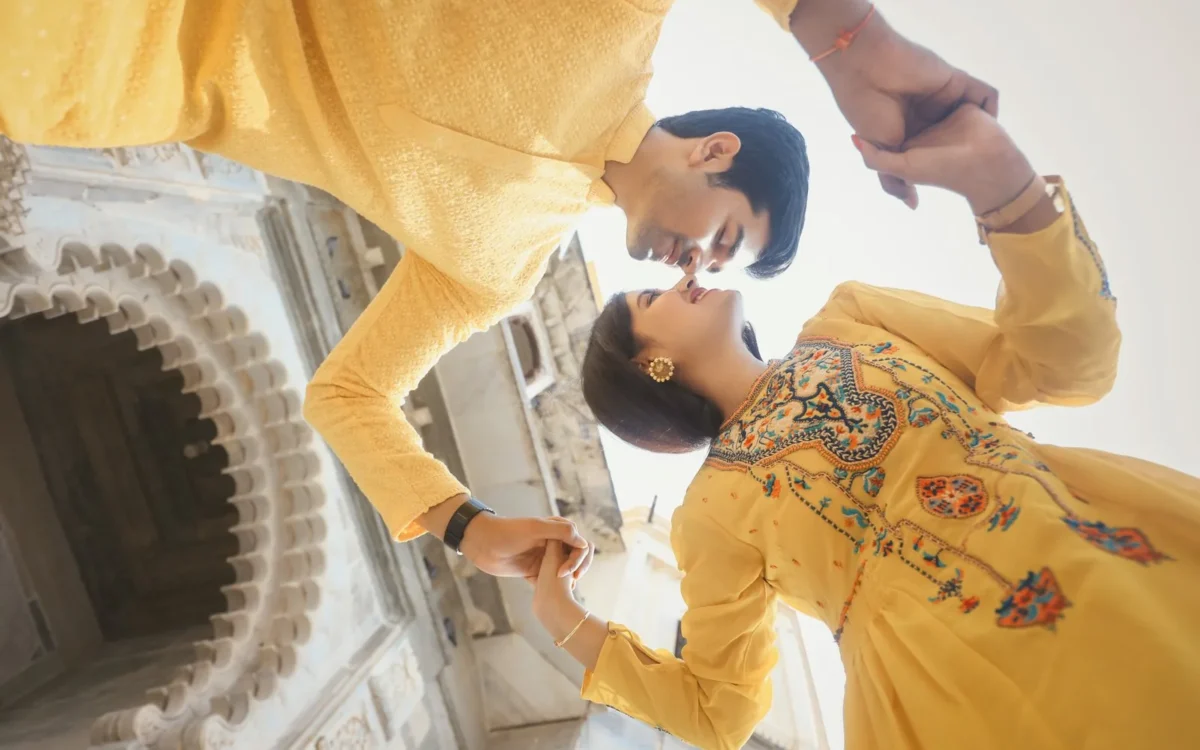
Good wedding couple poses begin with a useful question: what can the two of you comfortably do together? A familiar handhold, a short walk or a quiet conversation gives a portrait a starting point. Trying to reproduce twenty saved photographs, down to every fingertip, often takes attention away from the person standing beside you.
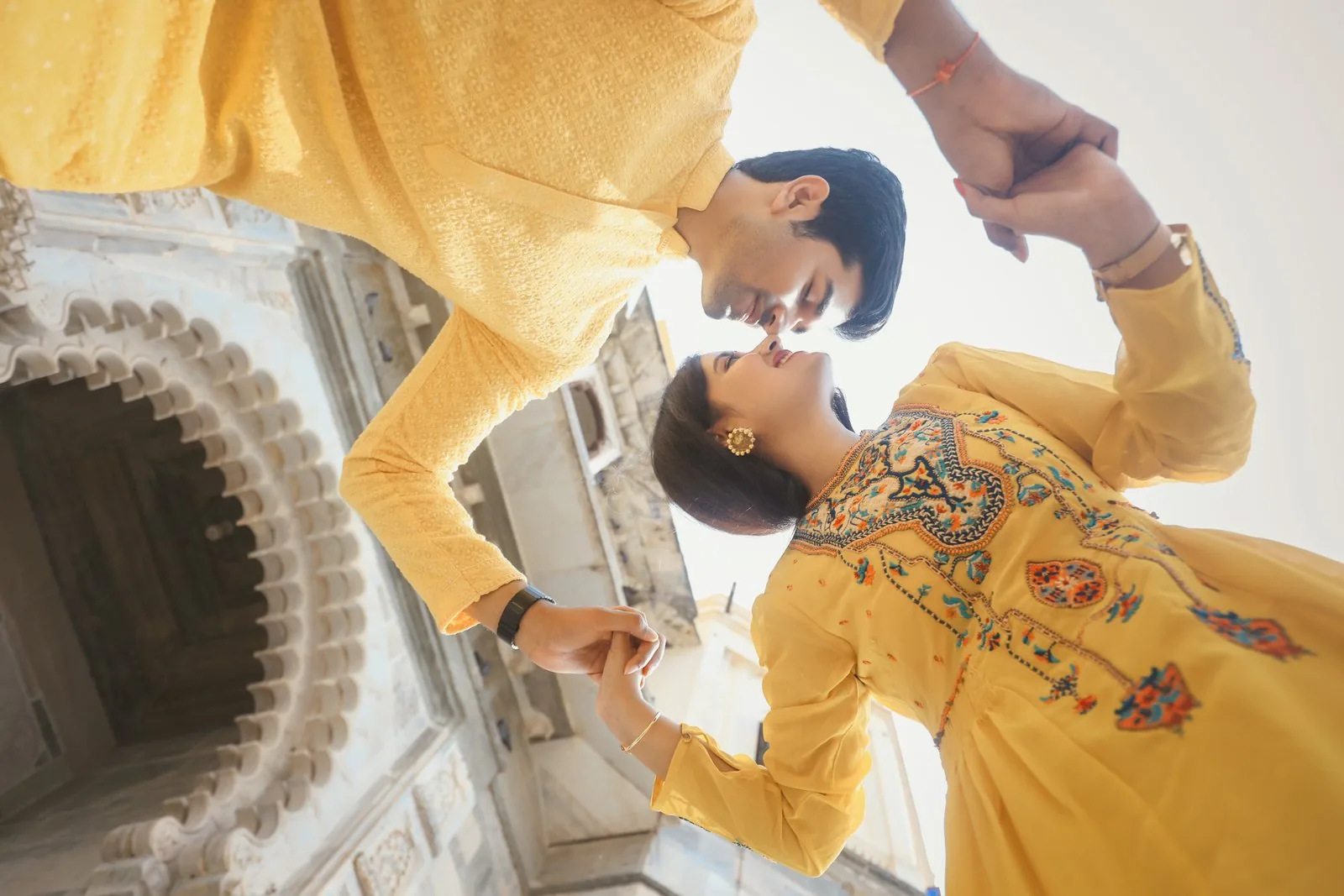
For Indore couples planning portraits between wedding functions, the aim is a small set of photographs with variety: a clear picture of both faces, a wider frame that includes the setting, a closer moment and one photograph that feels entirely your own. This guide explains how to build that set without turning the wedding day into a posing rehearsal.
Start with comfort, then refine the picture
Tell your photographer what feels uncomfortable before the session begins. You might dislike public displays of affection, need help managing a heavy outfit, or simply prefer quiet direction to a crowd cheering you on. None of these preferences prevents a good portrait. They help the photographer choose a better starting point.
A pose is guidance, not a test. It can establish where you stand and where the light falls, while leaving your expression free to change. If an instruction feels unnatural, say so. A small adjustment is more useful than holding an uncomfortable position and hoping the camera will hide it.
7 wedding couple poses to adapt, not memorise
1. The relaxed side-by-side portrait
Begin with both of you standing close enough to feel connected, looking towards the camera. Let shoulders settle and avoid locking knees. A slight turn can help an outfit fall cleanly, but there is no universal body angle everyone must copy. This straightforward portrait matters: it gives you a photograph where relatives can see both faces and the clothes you chose.
2. A short hand-in-hand walk
Use a clear, level path and a pace that works for the slower walker. Take a few steps, speak to each other and let the photographer choose the moment. Heavy hems, unfamiliar shoes and trailing fabric may make standing movement safer than walking. There is no need to run, climb or balance on an edge for a lively photograph.
3. Turn towards each other
From the same standing position, turn attention to your partner. A simple conversation is enough. You do not have to produce a laugh on command. A small smile, a thoughtful expression or a pause can be more recognisable than an exaggerated reaction. Ask the photographer to keep watching between instructions, when expressions often change.
4. The comfortable close portrait
If closeness feels natural, try an easy embrace or a gentle forehead touch. If it does not, a hand on an arm can create connection without forcing intimacy. Keep enough room to breathe and speak. Do not press faces together so firmly that the position becomes uncomfortable, or let an accessory block the expression you want recorded.
5. Give hands an ordinary job
Hands can hold each other, rest on a sleeve or lightly adjust a jacket. The action should make sense to you, rather than exist only for the photograph. Watch for a tight grip or a bent wrist that feels strained. Avoid tugging jewellery, pinned fabric or a hairstyle for the sake of a prompt. Ask before adjusting anything your partner is wearing.
6. Sit together for a different pace
A stable chair or clean bench can change the rhythm when standing portraits become tiring. Check the surface, outfit and room to move before sitting. Let the photographer arrange a frame where both faces remain visible, without asking you to twist into an awkward position. This option can suit couples who need a seated session or a rest between functions.
7. A wide portrait with a small shared action
Choose one part of the venue you want to remember, then keep the action simple: standing beside each other, taking a few steps or looking across the space. The setting should support you, not swallow you. You do not need a dramatic lift, dip or spin to make a wide photograph interesting. Those movements are optional, and unsuitable when clothes, mobility or the surface make them unsafe.
Build variety without changing location repeatedly
One comfortable position can produce several different photographs. Start with both people looking towards the lens, then towards each other. The photographer can move closer for expressions and step back for the surroundings. Small changes in attention often provide more useful variety than a long list of elaborate positions.
For wedding couple poses in Indore, consider the actual conditions at your venue rather than a fixed clock time from a social post. Ask your photographer where light, access and privacy work together on your date. Keep an indoor alternative if weather or guest movement makes the planned corner impractical.
Before booking, include posing guidance among your questions for the wedding photographer. Ask to see a complete couple-portrait sequence, not only one striking image. You want to understand how they photograph two people through different expressions and distances.
Protect the time around portraits
Discuss a realistic portrait window with the photographer and the person coordinating your functions. Include the walk to the chosen spot, outfit adjustments and a return route. Do not assign a fixed duration based only on another couple’s wedding. Your schedule, ceremony and clothing may need a different plan.
Preparation also starts before both people are ready. Keep essential accessories together and tell the team when an outfit is still being finished. Our bridal getting-ready photo guide explains how a calm preparation space can help the photographs before the couple session.
Choose photographs for memory, not pose-count
When the gallery arrives, compare expressions and meaning rather than counting how many wedding couple poses you completed. Keep a clear shared portrait, a photograph that records the setting and a closer frame you both like. Near-duplicate pictures do not all need to occupy album pages.
The wedding album photo selection guide can help you turn those choices into a sequence. An album usually benefits from a change of distance and mood, rather than five consecutive versions of the same embrace.
A simple brief to send your photographer
- We would like a clear portrait of both of us and a few quieter, natural interactions.
- These movements or types of touch are comfortable for us; these are not.
- Please account for our clothing, shoes and any mobility needs.
- We prefer gentle prompts instead of copying every detail of a reference photograph.
- We want one wider photograph that includes a part of the venue we care about.
You do not need to become performers to enjoy your photographs. The most useful wedding couple poses give you enough direction to begin, then enough room to remain yourselves.
Further reading on movement-led portrait direction: Dana Lewis Photography’s guide to wedding photography poses. The ideas above are adapted for planning a comfortable Indian wedding portrait session, not a promise about any studio’s package or delivery.