
Wedding Photography Lighting: A Practical Guide for Indore Couples
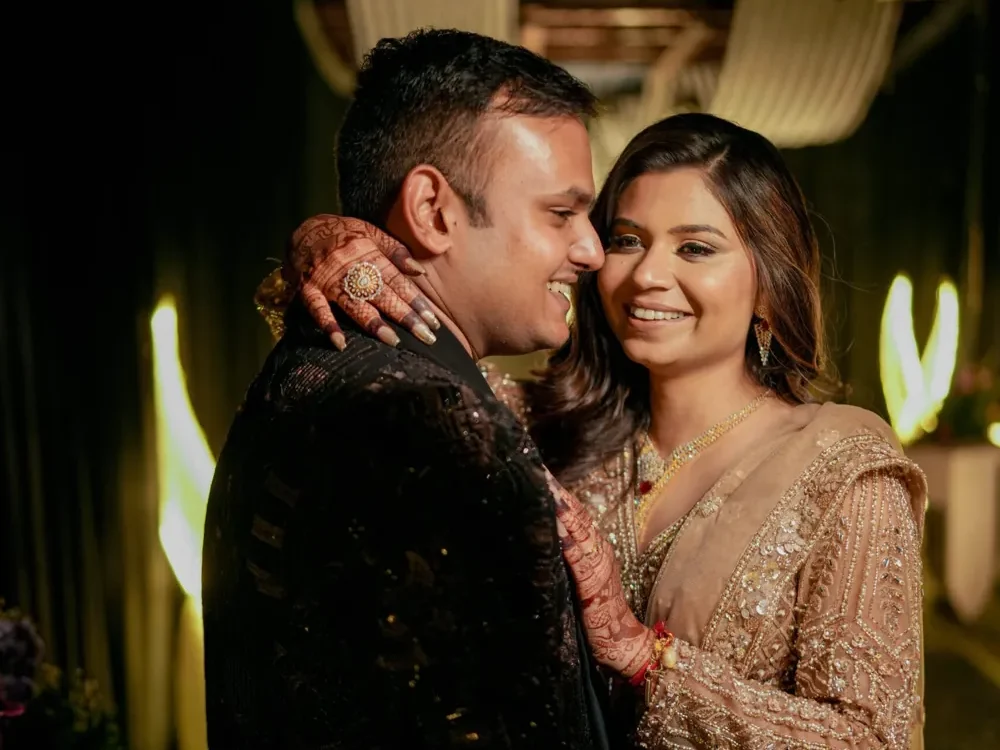
Good wedding photography lighting is not the same thing as a brightly decorated venue. A reception stage can glow beautifully while the couple’s faces remain in shadow. A getting-ready room can look ordinary yet have one window that makes a calm, flattering portrait. For Indore couples, the useful question is not “Will you bring enough lights?” It is “How will you photograph us in the places where the day actually happens?”
This guide explains what to look for in a photographer’s lighting work, what to discuss with your decor team and where a small decision before the wedding can protect an important photograph. You do not need to choose camera settings. You need to give the team room, time and a clear brief.
Wedding photography lighting starts with faces
When reviewing a gallery, look beyond the chandeliers and dramatic silhouettes. Can you see both people’s expressions during the ceremony? Does a cream outfit still have texture? Are family portraits clear without every face looking flat? Ask for a complete wedding with indoor and evening coverage, rather than judging the team from a handful of sunset portraits.
The quantity of light and its quality are different. A strong ceiling light directly above someone can leave dark eye sockets. Softer light coming from a useful direction may give a more comfortable result, even in a less brightly lit room. The photographer should decide where to stand and whether to add light, not simply turn every photograph into the same flash-lit scene.
Choose the getting-ready corner before makeup begins
Visit the actual room, if possible, and notice where daylight enters. Keep a small area near a window free of bags, food trays and spare clothes. Do not assume the largest room has the best portrait corner: the direction of the window and the background matter more than floor area.
Ask the photographer whether the mirror position works for pictures. A window behind the bride can create a different result from a window beside her. Both can be useful, but neither guarantees a good portrait without considering the face and the background together. Avoid moving makeup furniture at the last minute without checking with the makeup artist.
For a fuller preparation plan, read our bridal getting-ready photography guide. Share any comfort or privacy limits before the team starts photographing.
Daylight portraits need a location plan, not just a clock time
A courtyard, shaded walkway and open lawn can behave differently at the same hour. Rather than asking for every portrait at a fixed “best time”, agree on a primary spot and a nearby alternative. If the ceremony runs late, the team should know which pictures matter most and which location can still work.
Direct sun is not automatically a failure, and shade is not automatically flattering. Bright patches across faces, a pale wall reflecting light or a dark background can change the picture. Let the photographer adjust your position before collecting everyone for a group photo. It is easier to move two people than twenty relatives.
Decor lighting and photography lighting have different jobs
Decor lighting gives the room its mood. Photography lighting helps show people within that mood. For your reception, ask the decor or production team where coloured fixtures will point. A purple wall behind the couple can look intentional; a moving purple beam across a parent’s face during a speech can be distracting.
Discuss the stage, entrance, family portrait area and any performance space with the photographer. They may need a neutral light on faces while keeping the background warm. Do not ask the venue to change the whole design without a conversation between the teams. A small change in fixture direction or portrait position may be enough.
What mixed light means for your photographs
Window light, warm indoor lamps and coloured stage lights can fall on the same person. They do not all have the same colour. One white-balance adjustment cannot always make every source neutral at once. A photographer may change position, use flash or balance their light with the room to make skin look consistent while keeping the atmosphere.
Nikon’s lighting tutorial demonstrates how ambient light, flash, white balance and gels can work together. For couples, the takeaway is simple: ask to see real examples of difficult rooms, not a promise that editing will fix everything.
Flash can be quiet support or a deliberate look
Flash is not only for dark rooms, and using it does not mean the photograph must look harsh. It can lift faces, create separation from a background or give a portrait a more dramatic style. Available light can also be the right choice when it already suits the scene.
Ask whether the team uses on-camera flash, lights placed away from the camera or both. More equipment is not a scorecard. A light stand must fit safely without blocking guests, service staff or the ceremony. Where a venue or officiant has restrictions, confirm them directly and tell the photographer in advance.
If you prefer softer portraits or a direct-flash party look, show a few references and explain what you like about them. Our natural couple portrait guide can help you plan comfortable moments without copying every pose.
Give family portraits a proper place
A convenient stage is not always the best place for every group. Check whether relatives can stand comfortably, whether the background is cluttered and whether the photographer can fit everyone in without stepping into a walkway. For larger groups, both lighting and spacing need a quick test before guests line up.
Nominate someone who knows the families to gather each group. Keep the list clear and short enough to use. This gives the photographer time to check expressions, glasses reflections and who is hidden behind whom, rather than spending the whole window calling names.
A short lighting brief to send before the wedding
- The actual getting-ready room and any privacy limits.
- The ceremony and reception locations, including stage and entrance positions.
- A contact for the decor or production team.
- Any restrictions on flash, stands or access, confirmed with the venue or officiant.
- Your preferred portrait mood and the family groups that matter most.
- A nearby indoor option if outdoor portraits become impractical.
Keep this brief alongside your timeline. For weather planning, use our rain wedding photography backup guide. When comparing wedding photography packages in Indore, ask what lighting support and team coverage are included rather than assuming every quote covers the same setup.
Questions couples often ask
Do we need to book extra lights for photographs?
Not automatically. Let the photographer review the venue, schedule and planned coverage. Clarify what they bring, what the production team provides and whether an extra setup has a separate cost before agreeing to it.
Can a dark venue still produce good wedding pictures?
It can, but results depend on the available light, movement, access and the photographer’s approach. Look at complete evening galleries with similar conditions. A bright stage photograph alone does not show how the team handles moving guests or a ceremony away from the stage.
Should we stop the ceremony for a lighting adjustment?
Plan checks before important moments wherever possible. During the ceremony, respect the officiant’s rules and the flow of the event. A prepared team should know its workable positions and discuss restrictions beforehand.
The best wedding photography lighting plan leaves you free to enjoy the day. It gives the team enough information to show your expressions clearly, keep the room’s mood and make sensible changes when the schedule or light shifts.