
Bridal Saree Photography: Drapes, Poses and Ideas for Your Wedding
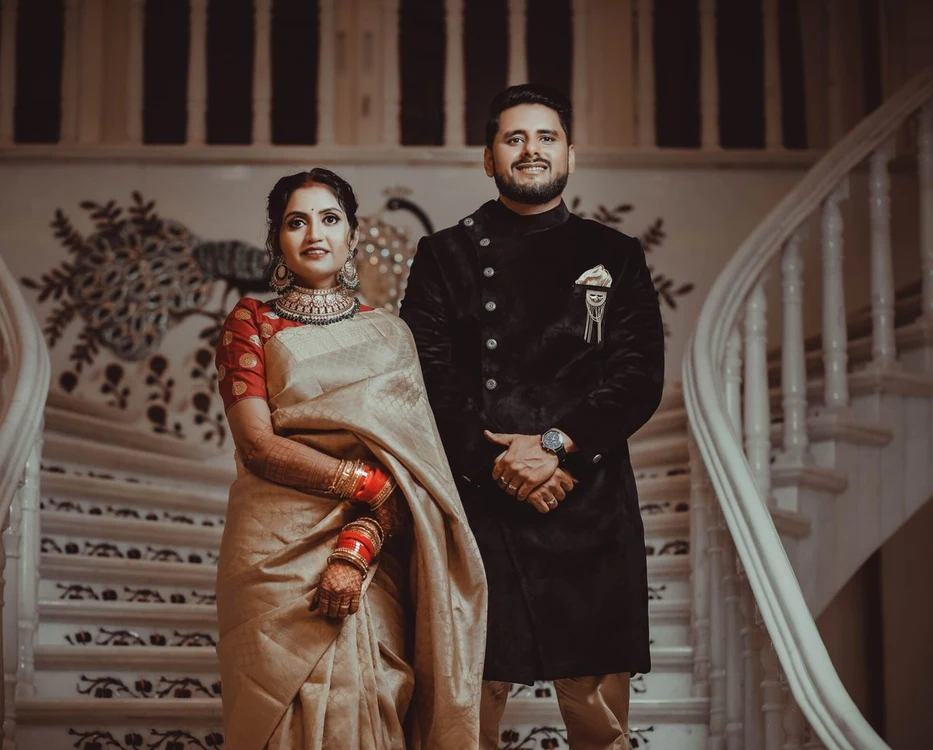
Six yards of fabric, draped a dozen possible ways, and one morning to get it all photographed. A bridal saree photographs differently from a lehenga or a gown: it moves, it catches light along the pleats, and its most beautiful details are the ones a quick portrait session misses.
If you are wearing a saree on your wedding day, here is how to make sure your photographs do it justice: the shots to ask for, the moments that show the drape, and a few small decisions that change everything.
Start With the Saree Itself
Before the wedding, the saree deserves its own frames: the fabric spread out, the border and the weave up close, the blouse and jewellery laid beside it. These detail photographs become the opening notes of your album’s story. Natural window light treats silk, tissue and handloom textures kindly, so keep the saree somewhere it can be photographed before it is worn, not after the rush begins.
The Draping Is a Ceremony Too
The half hour of draping is full of photographs: your mother or sister tucking the pleats, the pallu being set and reset until it falls right, the moment you first see yourself fully draped. Tell your photographer when the draping begins, not just when it ends. The getting-ready hour holds some of the day’s most honest frames, as our guide to bridal getting-ready photos shows.
Bridal Saree Photography: The Shots That Matter
The full-length drape. One clean, unhurried portrait where the whole saree is visible, pleats to pallu. This is the frame parents frame. Give it five minutes and good light, and let the photographer step back far enough for the fall of the fabric.
The pallu in motion. A saree comes alive when it moves: the pallu settling over your shoulder, a slow turn, a walk down a corridor or a staircase. Ask for a few frames made while you move rather than pose.
The details. Pleats at the waist, the border against your hands, the drape over your jewellery. A saree and bridal jewellery are designed for each other, and close frames of the two together are worth the minute they take; our bridal jewellery photography guide has more on pairing them.
The portraits. Classic bridal portraits work differently in a saree: the pallu frames the face, and a slight angle shows both the drape and the jewellery. Our bridal portraits guide covers how to plan a short portrait window into the day.
A Saree Is Photographed Differently
One thing worth knowing before the wedding: a saree is not a lehenga with different wrapping. It has no fixed silhouette, so the way it falls changes with every step, and the camera sees all of it. That is a gift if your photographer knows to work with it, and a miss if the day is treated like a sequence of stiff lineups. If you are still weighing the two, our piece on bridal lehenga photography shows how differently each one behaves in front of a lens.
Let the Day Happen Around the Saree
The photographs you will love later are rarely the arranged ones: adjusting the pallu mid-conversation, the drape flaring as you hug someone, the saree pooled around you during a quiet minute. A photographer working in a candid way finds these without stopping the day, which is exactly what candid wedding photography is for.
Small Decisions That Help the Photographs
Pin the pallu where it stays put, so you are free to move and laugh without holding it. Keep five minutes between getting ready and your first event for unhurried portraits. And if your saree has a story, a weave from your grandmother’s collection, a border chosen over months, tell your photographer. Knowing what matters changes what gets photographed.
Planning your wedding in Indore and dreaming in six yards? Call us at 7385222228, and let us plan how your saree will be remembered.